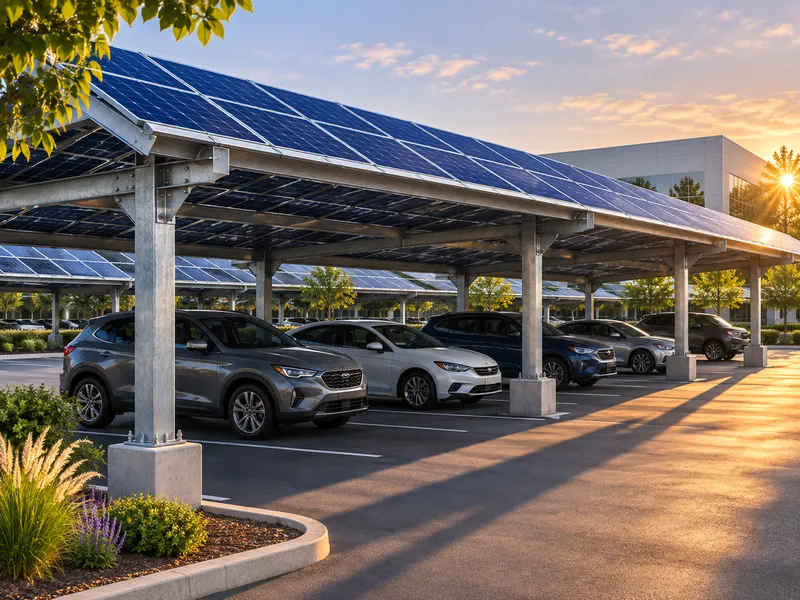
In short: a solar carport costs more per kW than rooftop solar, but it uses space a roof cannot, adds shade and rain cover, and makes EV charging easy. It is usually worth it on sites with large car parks, high daytime power use, or roofs that are full or unsuitable.
Advantages
- Uses existing land: no extra land and no roof work
- Shade and shelter: cooler cars and dry walkways
- EV charging: chargers mount on the columns, close to the power
- Free orientation: tilt and direction chosen in design
- Visible: shows customers and staff your commitment to clean energy
- Cool modules: open ventilation underneath helps output in hot climates
Disadvantages
- Higher cost per kW: the structure and foundations replace the roof the building would provide
- Permits: a carport is a structure, so building approval and engineering are usually needed
- Construction in a working car park: needs phasing
- Rain between modules: standard designs are not waterproof unless you choose a waterproof carport
- Vehicle impact: columns need protection where trucks and vans move
Is a solar carport worth it?
It usually is when most of the output is used on site at a good electricity price, when you would build shade or EV charging anyway, or when local rules require PV on car parks. It is harder to justify when power is cheap and the roof has free space. See carport vs rooftop and how to estimate payback.
Do you need a permit?
In most countries, yes: a solar carport is a structure, so it usually needs building approval with structural drawings and calculations, plus the normal electrical approvals for the PV system. Rules vary by country and city, so check with your local authority. We provide the drawings and calculation summary for your engineer.
Get a quote
Tell us about your car park
Send the number of spaces and the site location. We reply with a layout, structure proposal and price, usually within one working day.
- WhatsApp: +86 186 0326 1208
- Phone: +86 186 0326 1208