Step 1: system size
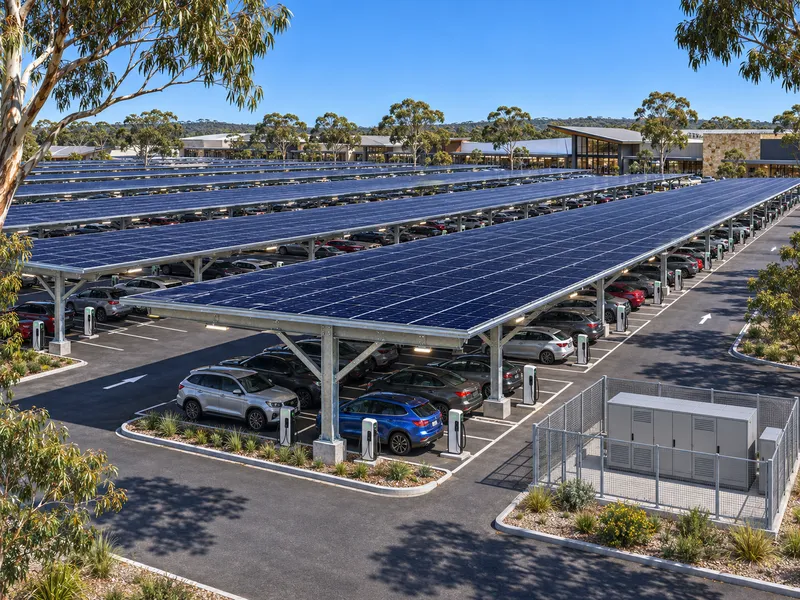
Count the spaces you will cover and multiply by about 2.3 kWp per space. 200 spaces give about 460 kWp.
Step 2: yearly yield
Multiply kWp by the specific yield for your location (kWh per kWp per year). Typical values:
| Region | Specific yield (kWh/kWp/yr) |
|---|---|
| Northern Europe | 850–1,000 |
| Central Europe | 1,000–1,200 |
| Southern Europe | 1,400–1,650 |
| Southeast Asia | 1,200–1,400 |
| Australia, South Africa, Latin America | 1,500–1,800 |
| Middle East and North Africa | 1,700–2,000 |
Use a solar tool such as PVGIS for your exact location and tilt.
Step 3: value of each kWh
Power used on site is worth your full electricity price. Power exported is worth the export tariff, often much less. Car parks next to shops, factories and offices use most of the output during the day, which is why carports pay back well there. EV charging adds a second source of value.
Step 4: payback
Payback in years = total installed cost ÷ yearly savings. Include structure, modules, inverters, foundations, installation, grid connection and permits in the cost.
Worked example
200 spaces in Southern Europe: 460 kWp × 1,500 kWh/kWp = 690 MWh per year. If 85% is used on site at 0.18 per kWh and 15% exported at 0.06, yearly value is about 105,600 + 6,200 = 111,800 (in your currency). Divide your total installed cost by this figure to get simple payback.
Want this calculated for your site? Send the location and number of spaces.
What changes the yield
- Orientation: carport rows follow the car park, so the roof may not face the equator. At low tilt (3–10°) the loss from orientation is small, often under 5%.
- Shading: trees, light masts and buildings around the car park reduce output.
- Soiling: dust in dry climates can cut output by several percent; plan cleaning.
- Temperature: carports are well ventilated underneath, which keeps modules cooler than on many roofs.
Other value to include
Shade and rain cover make a car park more attractive to customers and staff. Chargers can earn revenue. Some markets pay incentives or require PV on large car parks. These do not appear in a simple kWh payback, but they often decide the project.
Get the inputs right
Use your real electricity tariff, including demand charges, and your real daytime load profile. A system sized to the daytime load uses almost all of its output on site.
Get a quote
Tell us about your car park
Send the number of spaces and the site location. We reply with a layout, structure proposal and price, usually within one working day.
- WhatsApp: +86 186 0326 1208
- Phone: +86 186 0326 1208